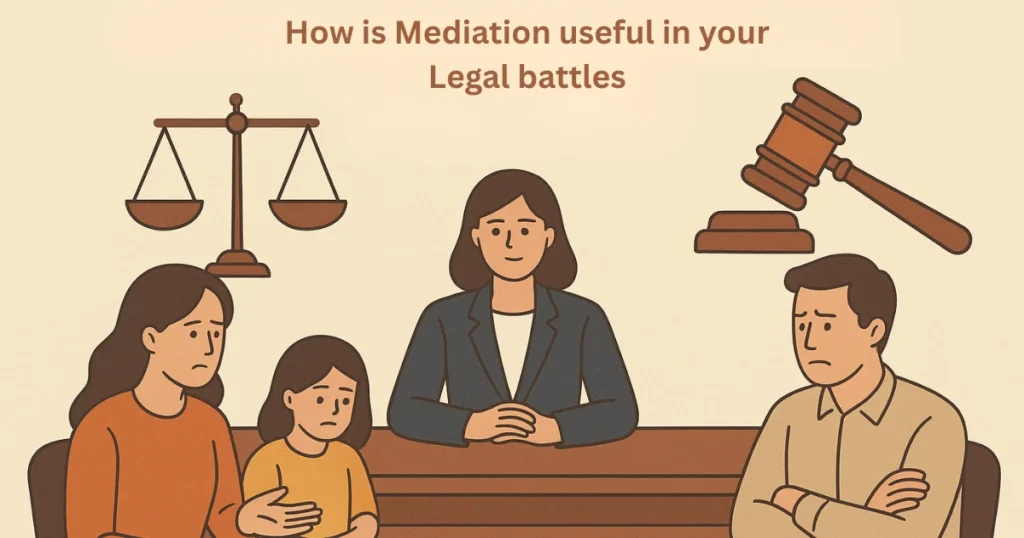
As a lawyer and trained mediator working right here in Illinois, I often explain to clients that going to court is like using a sledgehammer, while mediation works more like a precise tool. A judge who is unfamiliar with your business and family makes the final decision in a lawsuit. During mediation, you retain the “power of the pen.”
In Illinois, the Uniform Mediation Act (710 ILCS 35/) primarily governs mediation, meaning everything said during mediation remains private. Here’s how we use this approach in different types of cases around our state.
1. Civil litigation & personal injury
In the Law Division (cases valued at over $50,000), mediation can be used to settle large-scale conflicts such as car accidents, medical malpractice, and product liability cases.
- Why it works: When it comes to injuries, the amounts on both sides may be the same. A mediator can give everyone an honest look at what a local jury might actually decide, which helps wrap up cases that could drag on for 2–3 years until trial.
- The “Rule 20” Referral: Under Cook County Local Rule 20.02 (and similar rules in places like DuPage or Lake counties), judges can send parties to mediation. This clears up the court schedule and saves everyone a lot of money on expert witnesses.
2. Commercial & business disputes
For businesses in Illinois, fighting in public court can hurt your name. Mediation gives a private way out for:
- Breach of Contract: Sorting out problems with suppliers without destroying the relationship.
- Partnership Dissolutions: Often called “Business Divorce,” where we split up assets and intellectual property without messy public records.
- Employment Claims: Avoiding the Illinois Department of Human Rights (IDHR) wage, hour, or discrimination process.
3. Probate & estate contests
Fights over estates hit hard because they mix money with years of family memories.
- The Goal: We turn to mediation to settle Will Contests or arguments about how trusts are managed.
- Benefit: A judge in court will only consider the precise wording of the Will. During mediation, we can discuss the personal issues that often drive the conflict, to help preserve whatever family connection remains.
4. Chancery & real estate
Illinois has a strong tradition of Mortgage Foreclosure Mediation. Many court districts (such as the 19th and 18th) run special programs that help homeowners and banks explore options other than foreclosure, such as changing loan terms or pursuing a “deed in lieu.”
The legal standards (IL Bar & Supreme Court)
As a licensed professional, I follow clear rules so the process holds up:
1. Confidentiality: Under 710 ILCS 35/4, everything discussed in mediation is protected. I can’t be called to testify about what happened, and any offers you made can’t be used against you later in court.
2. Self-Determination: Following the Model Standards of Conduct for Mediators, I only guide the conversation. I can’t make you agree to anything.
3. Good Faith: You don’t have to settle, but many Illinois courts expect “Good Faith Participation.” Skipping sessions or refusing to work together can lead to penalties from the judge.
Comparison of mediation by practice area
| Practice Area | Primary Illinois Authority | Key Benefit |
| Family Law | Rule 905 / 750 ILCS 5/602.10 | Protects children from conflict. |
| Civil/Tort | Local Circuit Rules (e.g., Rule 20) | Avoids expensive expert fees. |
| Business | Uniform Mediation Act | Keeps trade secrets/disputes private. |
| Probate | 755 ILCS 5/ (Probate Act) | Preserves family relationships. |